Equity Impacts Outcomes


A Coherent Evaluation System—Not Just a Rubric
Support teachers and administrators with a connected workbook that turns the 2024 CSTPs and the 28 Elements into actionable goal setting, classroom observation, feedback, and year-end reflection.
Districts do not need “one more form.” They need a clear, aligned system that helps leaders and teachers understand what high-quality, equity-centered practice looks like in action.
This CSTP Evaluation Toolkit option has a structured workbook that connects teacher goals, formal observations, drop-in feedback, evidence collection, and professional reflection—so evaluation becomes a tool for growth, not compliance.
Using Google Sheets, data on teacher goal selection and teacher growth can be easily gathered for each school and for all teachers across the district in order to document instructional focus and growth trends.
We collaborate with district teams to adapt rubrics, observation templates, and feedback structures ensuring alignment with local contracts, evaluation cycles, and reporting needs. This approach allows districts to maintain their current systems while strengthening coherence, consistency, and instructional impact—bringing the toolkit to life in a way that is practical, sustainable, and immediately usable by leaders and teachers.

What the CSTP Evaluation Workbook Includes

Goal Setting
Equity-centered SMART(E) goals aligned to 2024 CSTPs.

Observation
Formal observation tools with consistent evidence language.

Drop-In Feedback
Quick walkthrough forms tied to instructional look-fors.

Evidence & Reflection
A year-end summary structure that connects practice to student impact.
See the System in Action
How the CSTPs Move from Standards to Daily Practice
A sample teacher evaluation workbook demonstrates how the CSTPs move from standards language into daily instructional practice, observation, feedback, and reflection.

Timely Feedback Between Formal Observations
Leaders can capture quick, focused walkthrough evidence aligned to priority look-fors, supporting ongoing coaching and implementation.
- Look-for category
- Evidence observed
- Feedback / next step
- Connection to teacher goal


Equity-Centered Goal Setting
Teachers select CSTP-aligned focus areas and develop SMART(E) goals that connect instructional practice, evidence, and student outcomes.

Consistent Observation Language
Administrators document evidence using shared CSTP-aligned language, supporting more consistent feedback across classrooms and evaluators.
-
Formal observation evidence
-
Strengths connected to CSTPs
-
Growth-focused next steps
-
Optional performance-level reflection


- CSTP-aligned focus area
- Equity outcome statement
- Evidence of progress
- Action steps for implementation
A Connected Growth Cycle
Teacher goals, observation evidence, feedback, and reflection are organized in one place, making year-end conversations more meaningful and evidence-based.
- Evidence by CSTP
- Progress toward goals
- Reflection on student impact
- Professional growth summary
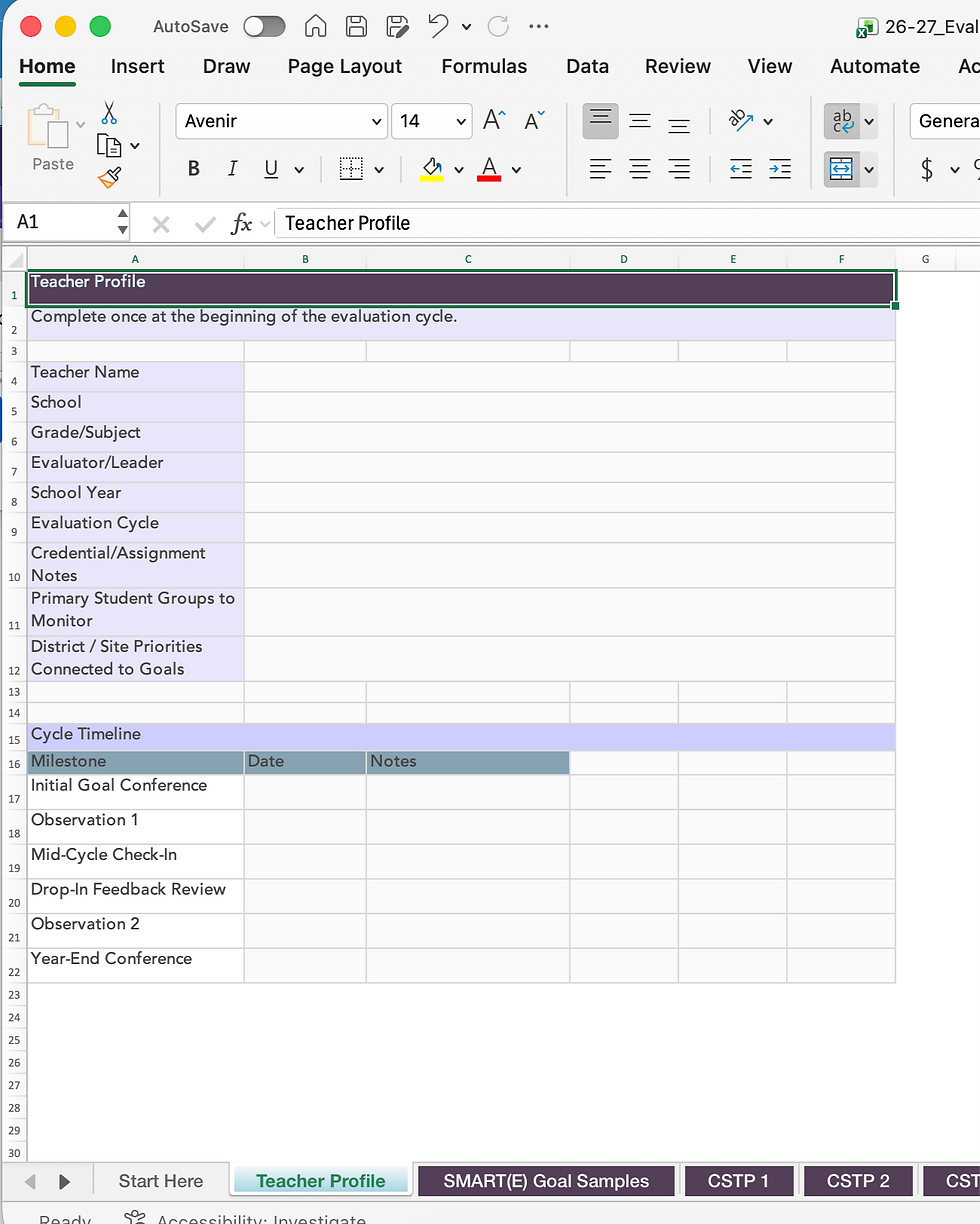
Explore a Example Workbook View
This preview shows selected sections of the CSTP Evaluation Toolkit. Full district versions are customized for local evaluation language, bargaining context, implementation timeline, and administrator calibration needs.
Embedded Sample Workbook Preview
Browse the sheets below
Ready to update your evaluation system for the 2024 CSTPs?
Impact Through Equity partners with districts to redesign tools, train administrators, and support implementation in ways that are coherent, equity-centered, and practical.